

Project Highlights
- Client: Lunden Food
- Sector: Fresh food production
- Website: www.lunden.ee
- Country: Estonia
- Service: Product carbon footprint model (LCA based)
- Service info: Semi-automated cradle to gate footprint tool for ingredients and recipes
- Project lead: Susanna Vain, Environmental Expert, Sustinere
- Why it matters: A clear understanding of product impact supports smarter recipe development and strengthens communication with private label customers as well as Lunden’s wider client base.
- Outcome: A practical model that reveals what drives each product’s footprint, highlights the most influential ingredients and enables faster, evidence-based decisions in product development.
The context
Lunden had explored the idea of assessing product impact for several years. The topic came up repeatedly in the company’s own ESG team. They followed how other food producers began to publish carbon footprint data, which showed that expectations in the sector were shifting
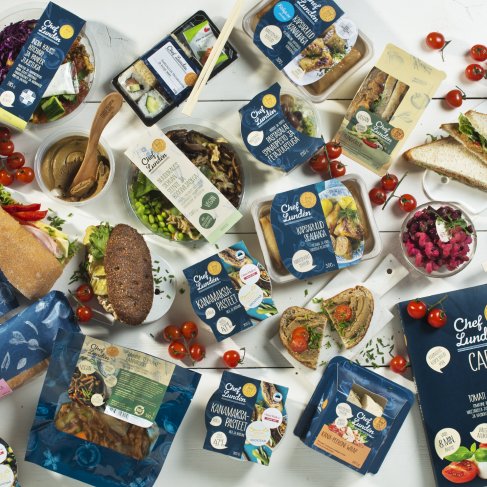
The company wanted a tool that would create real value for its operations. Lunden works with roughly 250 active products and develops about 150 new recipes each year.
This pace makes it challenging to understand the footprint of every product without a structured method. Intuition was no longer enough to understand what drives the impact of such a wide portfolio.
The need became more concrete when a Scandinavian client mentioned that footprint data might soon be relevant in cooperation. This confirmed that demand was rising. Lunden’s ESG team discussed several possible approaches but lacked a clear method that was both practical and manageable.
The company needed a structured way to understand the footprint of its sandwich product group, which forms the largest share of its production. This need for clarity became the starting point for the work with Sustinere.
What we delivered
We created a semi-automated carbon footprint model built on established LCA principles. The tool covers the cradle to gate scope and assigns a footprint value to every ingredient and every finished product. This gives Lunden a structured way to compare recipes and understand which components influence impact the most.
The work was led by Susanna Vain, Environmental Expert at Sustinere. She shaped the logic of the model and ensured that the structure stayed practical for a large and fast-moving product portfolio.
Susanna brought experience from similar modelling projects and helped translate technical requirements into a format that Lunden’s team could use confidently.
Under her guidance, the tool was designed to feel intuitive. Core worksheets focus on inputs and results. Extensive background data sits on separate sheets. A recipe can be selected and calculated in seconds, which makes the tool suitable for everyday use.
The model has already influenced real decisions. Lunden has identified ingredients that should be avoided or used more selectively. The tool supports conversations with private label clients by giving concrete alternatives with a smaller footprint. It also strengthens the development of the Chef Lunden product line by giving a clearer basis for recipe choices and future communication.
The result is a working tool that moves the company from assumptions to evidence and supports more informed product development.
In their words
At Lunden, the work with sustainability is led by people who sit close to product development and understand how everyday decisions shape impact. One of them is Lisanne Liiv, the company’s Sustainability Development Manager. She has been part of the discussions around footprint assessment for years and has seen how the need for clearer information has grown inside the organisation.
“Our biggest gain was clarity. We finally saw what drives the footprint of each product and how different ingredients compare. Having a numerical value for every component helps us make choices that are grounded in data, not intuition.”
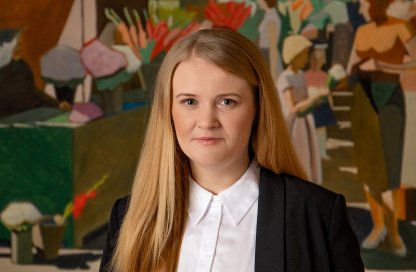
Lisanne Liiv, Sustainability Development Manager, Lunden
The model also gave her team new insight into the balance of impacts across the product lifecycle. Several assumptions shifted as soon as the numbers became visible. Packaging played a smaller role than expected. Transport accounted for less than the public debate suggests. The food itself dominated the footprint in the cradle to gate scope. These findings now guide how Lunden approaches new recipes and ingredient choices.
“The model is simple to use and fits into our daily work. It does not require everyone to understand LCA standards. The cooperation with Sustinere was smooth and professional and the tool has already helped us make more conscious decisions.”
Lisanne Liiv, Sustainability Development Manager, Lunden
What’s next
Lunden is already using the model in product development and in communication with private label clients. One client has received concrete footprint data and more structured use of the tool will grow as internal processes evolve. The model gives the company a steady base for comparing ingredients, planning new recipes and aligning choices with customer expectations.
There is clear potential to expand the model to other product groups in the future. Lunden sees several directions where deeper cooperation could be useful. The pace will depend on priorities, but the foundation for further development is now in place.