
What we delivered
Sustinere began by analysing the client’s existing risk management approach and identifying how climate-related considerations were already embedded within it. This helped define where the assessment could be made more granular, especially for longer time horizons and transition risks.
The project was delivered through a collaborative process involving specialists from across the client organisation. In structured workshops, participants identified and assessed climate-related risks relevant to underwriting, claims, portfolio performance, solvency, and operational resilience.
A key methodological improvement was the disaggregation of climate change into specific hazard types. This enabled a more targeted assessment of how different physical and transition risk drivers could affect the business.
Climate risks were assessed using the client’s existing impact and vulnerability scales, ensuring that the approach remained compatible with internal risk evaluation processes. This supported a more granular analysis and helped prioritise the most significant risks.
“Close collaboration with the risk manager was central to the project. It ensured that the methodology remained aligned with existing risk management and stress testing practices, and that the results could be applied in practice, not only documented as a theoretical assessment.”
Lauma Žihare, Sustinere Latvija environmental expert

Sustinere experts also carried out a structured scenario analysis covering both transition and physical risks, focusing on those with the highest potential impact. Transition risks were assessed using NGFS (Network for Greening the Financial System) scenarios [3], while physical risks were evaluated using IPCC (the Intergovernmental Panel on Climate Change) scenarios [4], national and international climate datasets, and peer-reviewed scientific literature.
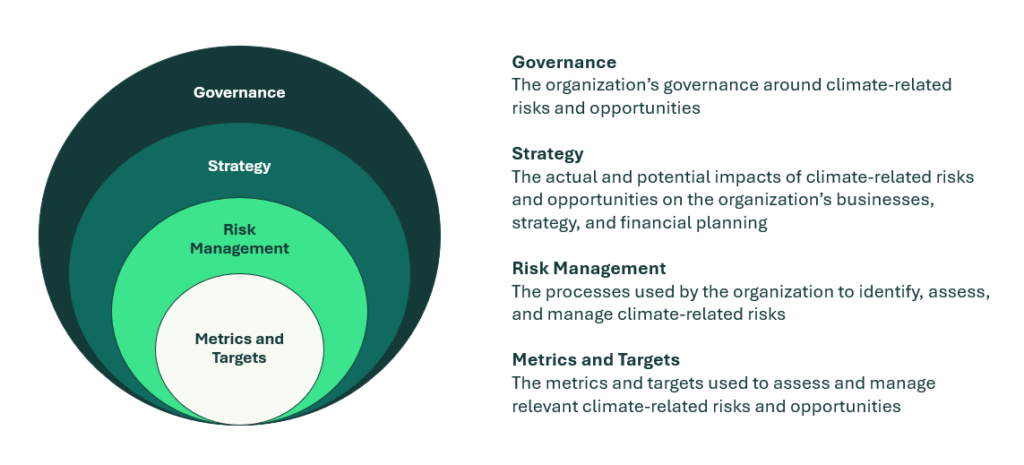
The methodology was developed in alignment with the TCFD framework and reflected insurance-specific regulatory and supervisory expectations, as well as relevant guidance from European and national financial supervisory authorities.
The result
By the end of the project, the client had a clear and structured view of climate-related and opportunities across the organisation, including both physical and transition risks. The final methodology was aligned with internal processes and designed to support ongoing climate stress testing, long-term risk modelling, and strategic decision-making.
As the client’s Sustainability Manager noted:
“We particularly value the level of detail and the effort to understand our industry, which ensured that the result is not just theoretical, but something we can actually use in practice.”
The approach supports risk management and regulatory reporting, including ORSA and CSRD [5], while also informing long-term business planning.
What’s next
The next phase is to further embed climate risk considerations into the client’s core processes and decision-making. This includes continued development of climate stress testing capabilities, refinement of the methodology as data and supervisory expectations evolve, and use of the results as a basis for strategic initiatives such as a Climate Action Plan.
In this way, the project creates a platform for integrating climate factors more consistently into risk management, business performance, and long-term sustainability planning.